


Anti-allergen carpet vacuuming is crucial for removing allergens like pet dander and dust mites. We recommend using vacuums with high suction power (at least 17 kPa) and HEPA filters that capture 99.95% of allergens. Regular vacuuming is essential—weekly for general areas, and daily if you have pets. Consider specialized vacuums with sealed systems for better allergen containment. By prioritizing these practices, we can considerably improve indoor air quality. Keep reading to discover more strategies for allergen management.
Key Takeaways
- Regular vacuuming is vital; aim for weekly cleaning or more frequently in high-traffic areas to reduce allergen accumulation.
- Use anti-allergen vacuums with HEPA filters to capture 99.95% of allergens effectively.
- High suction power (around 17 kPa) is crucial for pulling allergens from deep within carpet fibers.
- Consider specialized vacuums with sealed systems to ensure allergens are contained and not re-released into the air.
- Maintain filters by washing or replacing them as needed to preserve vacuum efficiency and indoor air quality.
Understanding Allergens in Carpets
You may be interested

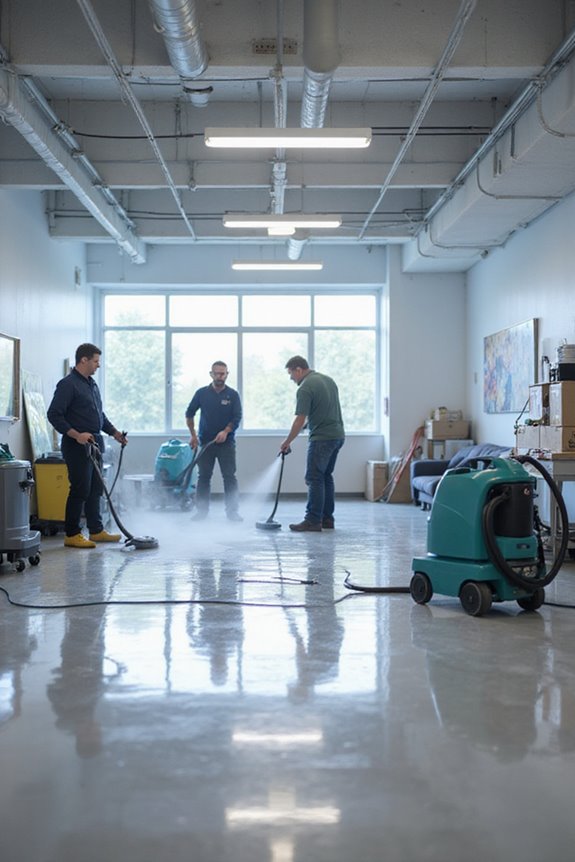

When we think about allergens in our homes, carpets often play a significant role in harboring these unwanted substances. The materials used in carpets—high-pile versus low-pile—greatly influence their ability to trap allergens. High-pile carpets provide more hiding places for allergen sources like pet dander, dust mites, and mold spores.
- Carpets can accumulate 5-25 grams of dust per square meter, far exceeding hard floors.
- They also attract fungi and other microorganisms, increasing health risks.
In homes, especially those built before 1978, carpets act as major reservoirs for these allergens. Understanding these allergen sources can help us make informed decisions about carpets and improve indoor air quality for ourselves and our families. Utilizing HEPA filtration technologies in vacuum cleaners can significantly enhance the removal of these allergens and promote a healthier living environment.
Essential Features of Anti-Allergen Vacuums
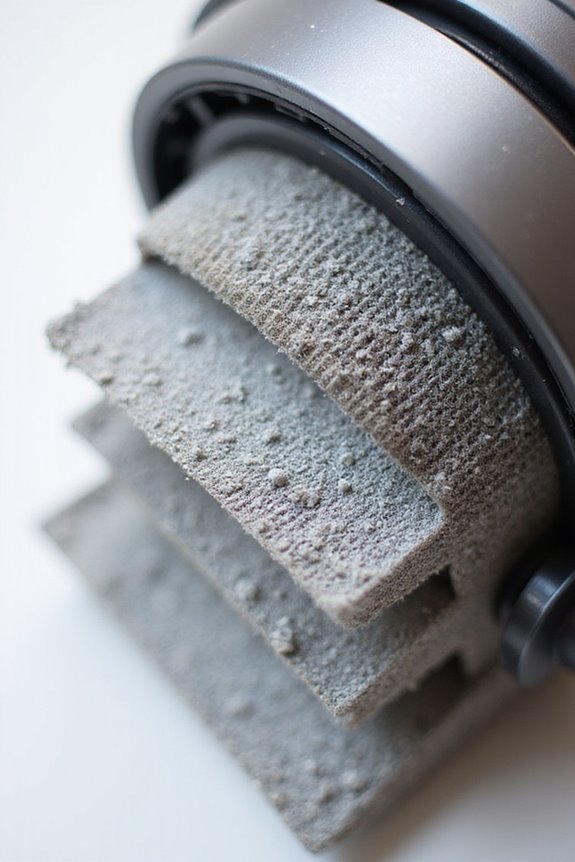
Understanding the essential features of anti-allergen vacuums is important for improving the air quality in our homes. High suction power, around 17 kPa or more, is critical for effectively capturing allergens embedded in carpets. We also want vacuums equipped with HEPA filters, which trap at least 99.95% of allergens.
Filter maintenance is key; washables and replaceables help keep our vacuums running efficiently. Complete seal technology prevents allergens from escaping, ensuring the air we breathe stays clean. Additionally, strong suction is crucial for guaranteeing deep cleaning and capturing allergens missed previously.
Other helpful features include:
- Self-sealing bags for hygienic disposal
- Detachable pods for hard-to-reach areas
- Powerful brushrolls to loosen dirt
Vacuuming Frequency for Maximum Allergen Control
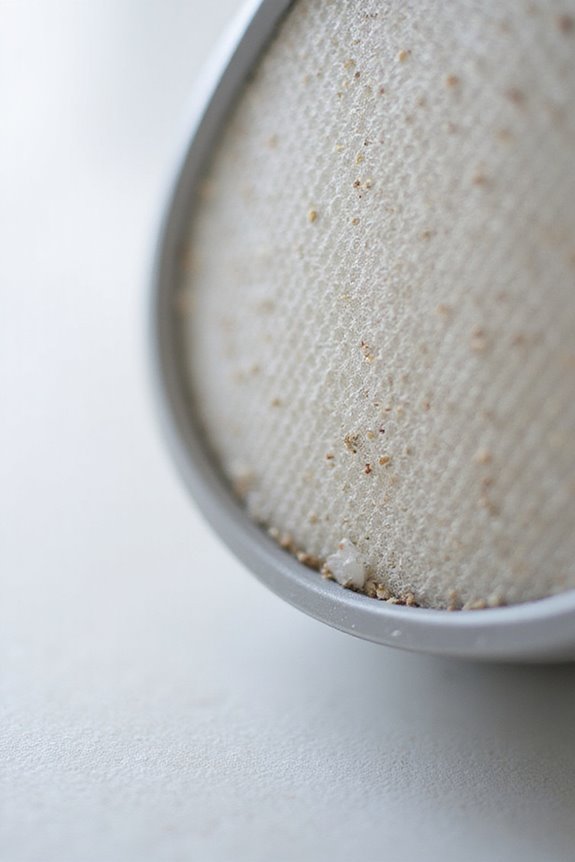
Vacuuming regularly plays an important role in controlling allergens in our homes. To tackle allergen accumulation effectively, we need consistent vacuuming routines. For general environments, vacuuming once a week is essential, but high-traffic areas really benefit from 2-3 times a week. If we have pets or severe allergies, daily vacuuming is vital to keep dander and dust at bay.
For households with young children, 3-4 times a week can greatly improve air quality. Remember, thick carpets trap more allergens, so consider increasing vacuuming frequency based on carpet texture. To maximize allergen removal, it’s beneficial to use advanced filtration systems that can capture dust and allergens effectively. Implementing these practices can lead to better indoor air, ultimately reducing allergy symptoms and promoting healthier living environments for all of us. Stay proactive with your vacuuming to enjoy those benefits!
Types of Vacuums for Allergy Management

Choosing the right vacuum for managing allergens can greatly impact indoor air quality and our overall health. Here are some options to evaluate:
- Canister Vacuums: These often have multi-stage filtration and HEPA filters, trapping 99.97% of particles. They’re great for strong suction but can be heavier to maneuver.
- Upright Vacuums: Designed with sealed systems, they capture ultra-fine allergens like dust mites. Their bagged models minimize exposure when disposing of dirt.
- Bagless Vacuums: They offer convenience, but require careful bin emptying to avoid releasing allergens. Many include HEPA filters for better allergen filtration.
- Specialized Vacuums: High-end models, like Miele, use advanced four-stage filtration to capture particles down to 0.1 microns.
- Cordless Vacuums: Lightweight and perfect for quick clean-ups, but battery life limits whole-house cleaning. These vacuums often have high-quality filtration systems that improve indoor air quality, particularly crucial for allergy sufferers.
Choosing wisely means better air quality!
Recommended Products

POWERFUL SUCTION. Dirt, fur & dust don’t stand a chance against the Pet Hair Eraser Allergen Lift-Off vacuum’s suction power.
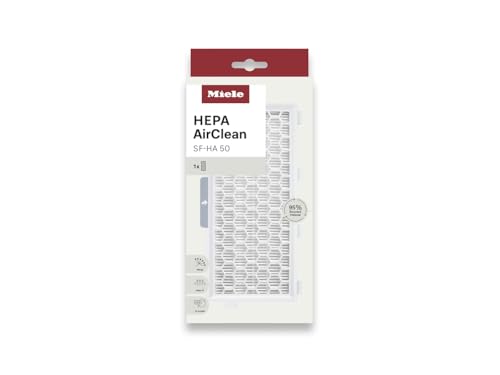
Use: Miele's SF-HA 50 HEPA AirClean Filter is compatible with Miele Guard M1 and L1, Complete C2 and C3, Compact C1 and C2 vacuum cleaners

POWERFUL SUCTION FOR CARPET & HARD FLOORS: Clean carpets and hardwood floors with strong multi-surface suction. This lightweight upright vacuum cleaner lifts dirt, debris, and pet hair for a complete home clean.
Key Technologies That Enhance Allergen Removal
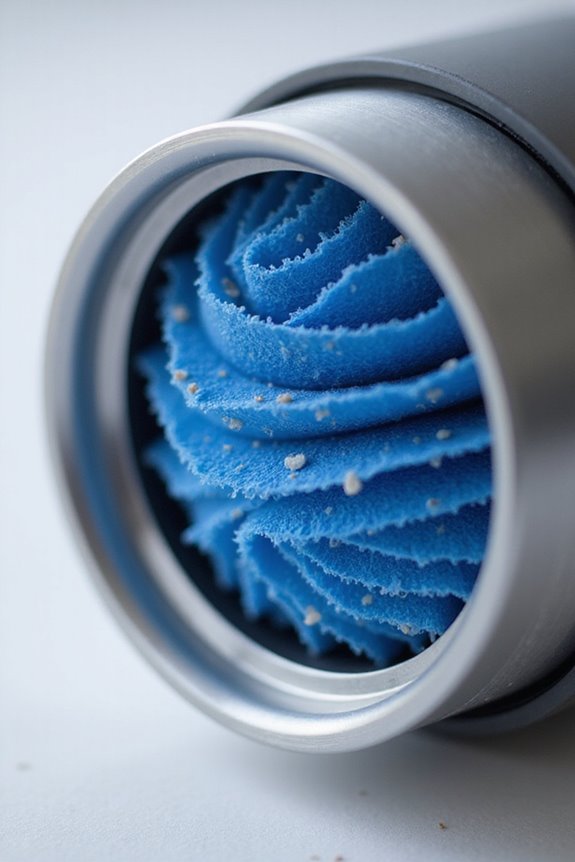
When it comes to enhancing allergen removal, the right technologies can make a significant difference in how effectively we tackle indoor allergens. HEPA filtration is essential; genuine HEPA filters capture 99.97% of particles as small as 0.3 microns, preventing allergens from re-entering the air. When integrated with sealed vacuum designs, they maximize allergen containment, ensuring a cleaner environment.
Another key technology is UV sanitization. UVC light can kill 99.9% of dust mites and allergens buried in carpets and upholstery, improving our overall cleaning effectiveness. This combination of HEPA filtration and UV technology not only targets surface-level allergens but also tackles those deeper, embedded ones. Together, these innovations create a powerful defense against indoor allergens. Regular maintenance of HEPA filters is also crucial for maintaining optimal performance in allergen removal.
Recommended Products

POWERFUL SUCTION FOR CARPET & HARD FLOORS: Clean carpets and hard floors with strong multi-surface suction. This lightweight upright vacuum lifts dirt, debris, and pet hair for a complete home clean.

POWERFUL SUCTION FOR CARPET & HARD FLOORS: Clean carpets and hardwood floors with strong multi-surface suction. This lightweight upright vacuum cleaner lifts dirt, debris, and pet hair for a complete home clean.

SELF-CLEANING BRUSHROLL: Engineered for more pet hair pickup with no hair wrap (vs. Shark bristle nozzles)..Voltage:120 volts. Wattage : 1200 watts
Strategies for Managing Pet Allergens
Managing pet allergens is essential for creating a healthier home environment, especially if you’re sensitive to allergens. One of the most effective strategies is pet removal, which can notably lower allergen levels over time. Although it’s often impractical due to emotional attachments, considering it might lead to long-term relief.
In addition, nutritional interventions, like specialized cat diets that reduce active allergens, can greatly help. These diets can show allergen reductions in as little as three weeks, providing a feasible option if pet removal isn’t possible.
Other strategies include:
- Restricting pets to certain rooms, especially bedrooms.
- Regular grooming and washing of pets.
- Frequent vacuuming with HEPA-filter vacuums.
- Utilizing allergen-targeted cleaning solutions to improve indoor air quality and effectively combat allergens.
Recommended Products

OPTIMIZED DESIGN FOR ENHANCED CLEANING: Ensures a thorough cleaning experience by targeting fine dust and particles with powerful suction and advanced filtration

Innovative Multi-Surface vacuum: Deep clean with the whirlwind canister vacuum.This vacuum features an integrated airflow control on the handle that can be easily switched at your fingertips.Dust cup capacity - 1.2 liters.Voltage:120 volts.Noise Level: ≤82 dBA
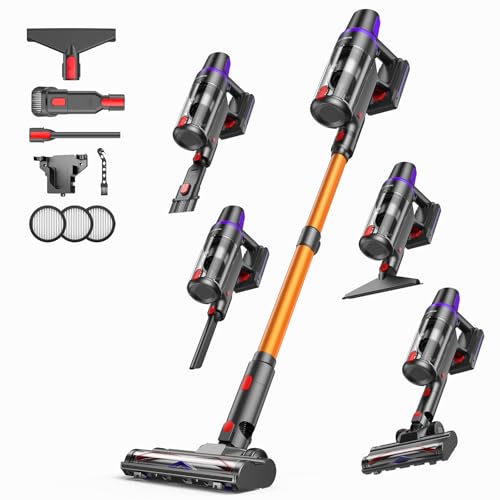
[3 Power Modes & 60-Min Runtime] This cordless handheld vacuum is equipped with a high-capacity battery that delivers up to 60 minutes of continuous cleaning in energy-saving mode. Choose from three power settings to adapt to different surfaces and tasks around your home. For added convenience, the battery can be removed for standalone charging, or you can use the included charging base for automatic power-ups and tidy storage
Recommendations for Improved Indoor Air Quality
To optimize our indoor air quality (IAQ), it’s essential we adopt effective strategies that target common pollutants in our homes. First, using a vacuum with a HEPA filter helps trap allergens from dust mites and pollen. Regular vacuum maintenance, like replacing filters, guarantees effective allergen control.
Next, let’s improve ventilation by opening windows or using exhaust fans, especially when cooking or cleaning. This minimizes indoor pollutant levels.
Lastly, removing allergen sources—like mold and tobacco smoke—creates a healthier environment. Seal cracks to prevent dust entry and use dehumidifiers to control moisture.
Recommended Products
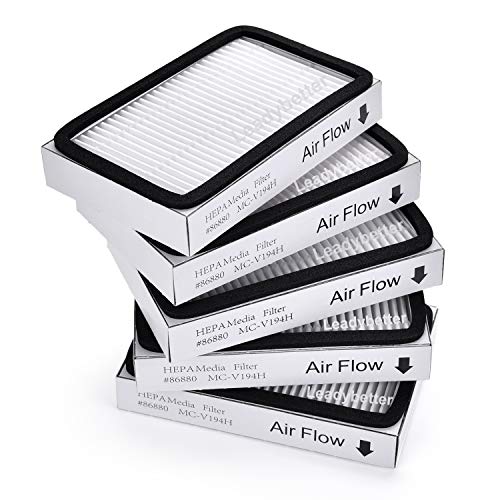
【Applicable machine model】our hepa filter 86880 series is perfect Compatible with kenmore 10065, 23725, 29219, 29229, 29319, 81214, 81414, BC3002, BC3005, BC4002, C38KBRM, 20-86880, EF-2, 40320, 02080001000, 610445, MC-V194H, MCV194H, KER-1805, 748167711949, 471194. Compare to part # 86880, 20-86880, 40320 and panasonic part # MC-V194H (MCV194H). Please confirm the filter model you need before placing an order, so as not to buy the wrong one.

COMPATIBILITY: These HEPA media filter replacement kit are compatible with Kenmore Canister and Upright Vacuum Cleaner #86889, 20-86889, 53295, 40324, for Panasonic Upright Vacuum Cleaner MC-V199H, MC-UG725, MC-UG727, MC-UG729, MC-GG525, MC-CG983

THE VACUUM FILTER REPLACEMENT FIT MODELS: Compatibe with Dyson DC41 Animal/Animal Total Clean/Exclusive/Multi Floor/Multi Floor Exclusive, DC65 Animal/Animal Complete/Animal Complete Exclusive/Animal Exclusive/Animal Exclusive/Animal Plus/Multi Floor/Multi Floor Exclusive/Total Clean, UP13 Animal, UP20 Ball Animal 2, Ball Animal 2/ Total Clean/ Iron, Ball Alleray Exclusive/ Extra, Ball Multi Floor Exclusive/ Origin, Ball Animal 3 Complete, Ball Animal 3 Extra, Ball Animal 3 Total Clean, Ball Animal 3+. Replace Part 920769-01 and 920640-01, The filters for dyson are very similar and very easy to get confused, Please confirm your vacuum cleaner model before purchase, No for DC40, DC50 filter
Frequently Asked Questions
How Do I Maintain My Anti-Allergen Vacuum?
To maintain my vacuum, I always follow essential vacuum maintenance tips. I regularly clean attachments and check filters, ensuring ideal suction. After each use, I empty the dustbin, keeping everything clear for better allergen control.
Can an Air Purifier Supplement Vacuuming for Allergen Removal?
Imagine a gentle breeze sweeping away invisible dust. I’ve found using an air purifier alongside vacuuming greatly improves air quality and allergen reduction, creating a healthier home environment where I can breathe easier and live well.
What Should I Look for When Buying Vacuum Bags?
When I buy vacuum bags, I always consider the vacuum bag types and their allergen filtration effectiveness. HEPA bags work wonders for capturing tiny particles, ensuring better air quality and allergy relief in my home.
How Often Should I Replace HEPA Filters?
I usually replace my HEPA filter every 6 to 12 months. Indicators for replacement include reduced suction, increased noise, and visible dust buildup; these signs help me guarantee ideal filter lifespan and performance in my vacuum.
Are There Any Specific Brands Known for Allergy Relief?
You wouldn’t believe the difference a good vacuum makes! Dyson vacuums and Miele options are my go-to for allergy relief. They trap allergens like superheroes, leaving my air fresh and my sinuses delightfully clear!

