


Vacuum motors can overheat due to several key factors. First, airflow restrictions from clogs or dirty filters reduce efficiency and strain the motor. Second, continuous use without breaks can generate excessive heat. Third, electrical issues like loose connections or worn components contribute to overheating. Finally, mechanical wear from inadequate lubrication can also be a cause. By addressing these factors proactively, we can enhance motor longevity and performance. There’s more insight ahead to help you prevent these issues.
Key Takeaways
- Airflow restrictions from clogs or clogged filters can lead to motor overheating by causing strain on the motor.
- Prolonged use without breaks generates excessive heat and may result in overheating or burnout.
- Electrical issues such as power surges or loose connections can create stress on motor components, causing overheating.
- Mechanical wear, including worn bearings and insufficient lubrication, increases friction and heat generation in the motor.
- Neglecting regular maintenance, such as inspections and timely repairs, can significantly increase the risk of motor overheating and failures.
Airflow Restriction and Clogs
You may be interested


Anti-Tangle Brush Roll Design?

Bag Change Indicator Light?
When we think about vacuum performance, it’s essential to understand how airflow restrictions and clogs can impact the motor’s efficiency and longevity. Hose blockages, like small objects or dirt clumps, may restrict airflow, causing motors to work harder and heat up faster. This strain can lead to thermal shutdowns, reducing the vacuum’s lifespan.
To guarantee proper airflow dynamics, we should regularly inspect attachments and hoses. Here’s a quick checklist:
- Check for blockages: Drop a coin through the hose—if it doesn’t pass, there’s an obstruction.
- Inspect for bends: Make sure hoses are not twisted or deformed.
- Clean cooling vents: Dust buildup can dangerously restrict airflow.
Additionally, using vacuums equipped with HEPA filtration systems can also play a significant role in maintaining optimal airflow and enhancing the vacuum’s overall efficiency.
Keeping these areas clear helps avoid overheating, ensuring our vacuum operates effectively.
Recommended Products

CHECK BEFORE YOU BUY: EZVAC's universal base is designed to fit multiple HVAC sizes. The custom black elbow ONLY fits a 1-inch opening and is ribbed for easy grip. Please make sure your drain line has a 1-inch opening before ordering

[FITS MOST VACUUM CLEANERS ] Sealegend dryer vent vacuum attachment features a premium universal connector design, compatible with most vacuum cleaners, solving compatibility issues!
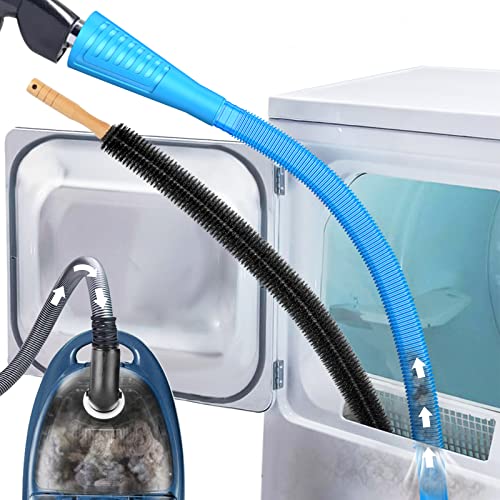
[REMOVE LINT BUILD-UP] - Sealegend dryer vent cleaner dryer replacement parts removes lint that has accumulated for many years in your dryer vents, making your appliance runs more efficiently and securely.
Dust, Debris, and Filter Maintenance

As we’ve seen, airflow restrictions can greatly impede vacuum performance, but the role of dust, debris, and filter maintenance can’t be overlooked. When filters clog from fine particles, they restrict airflow. This forces the motor to work harder, which raises its temperature and risks overheating. Regular maintenance frequency is key; we need to wash or replace our filters to avoid this build-up and guarantee ideal cooling. Understanding HEPA filter types is also essential, as certain models handle fine dust better, preventing rapid clogging. By monitoring our filters and cleaning ventilation paths, we maintain both airflow and cooling efficiency. Taking these proactive steps helps guarantee our vacuum operates effectively and averts motor strain that leads to overheating.
Recommended Products
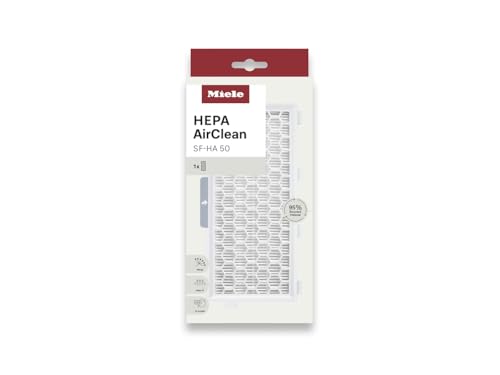
Use: Miele's SF-HA 50 HEPA AirClean Filter is compatible with Miele Guard M1 and L1, Complete C2 and C3, Compact C1 and C2 vacuum cleaners
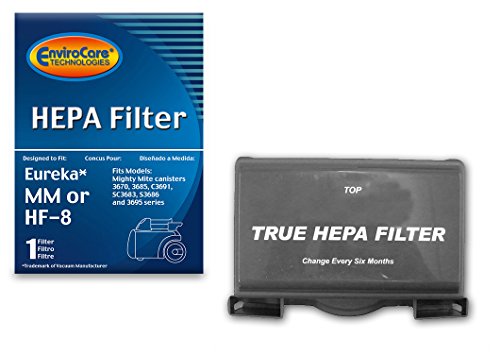
EnviroCare Replacement HEPA Vacuum Cleaner Filter Designed to Fit Eureka Sanitaire HF-8 MM Mighty Mite Pet Lover, Sanitaire Commercial Canister Vacuum Cleaners, 60666B, 60666A, 60666-6, EUR 60295-6

UPRIGHT AND CANISTER HEPA FILTER: Kenmore and Kenmore Elite upright and canister vacuum cleaners that use EF-9 HEPA Kenmore filters. Check manual and machine to ensure proper fit
Continuous or Improper Use

Continuous use of a vacuum, whether for long periods or on inappropriate surfaces, can greatly impact its motor performance. In our experience, prolonged motor usage generates excessive heat, leading to thermal expansion and degrading insulation. This can increase the risk of shorts and failures, making effective thermal management essential.
Using a vacuum on heavy debris demands higher torque, raising current draw and accelerating temperature rise. We should guarantee operational breaks to allow the motor to cool, as insufficient rest periods can trap heat and strain the motor components. Ignoring the manufacturer’s duty cycles can lead to overheating and premature burnout. Additionally, HEPA filters in vacuum cleaners can help mitigate dust exposure during prolonged use, contributing to overall operational efficiency. By understanding these factors, we can extend our vacuum’s lifespan and maintain peak performance efficiently.
Recommended Products

Perfect Compatible with Shark Navigator Lift Away Models: NV350_26, NV350A_26, NV350E, NV350Q, NV350T, NV350W, NV350W_N, NV350WC, NV351, NV351C, NV351WM1, NV351WM2, NV352, NV352C, NV352CFS, NV352E, NV352Q, NV354C, NV355, NV355-26, NV355C, NV355CFS, nv356E, NV356K, NV356Q, NV357, NV358, NV358BRN, NV360, NV367, NV360K, NV361BK, NV361PR, NV370, NV370_26, NV380, NV391, NV391C, UV440, UV440CCO, UV440CCOFS, UV490CCO, UV500WM, UV540, UV540CCO, UV541CCO, UV550, ZU503AMZ, CU500/CU512 series, Compare to Part # Xff350 & # Xhf350.
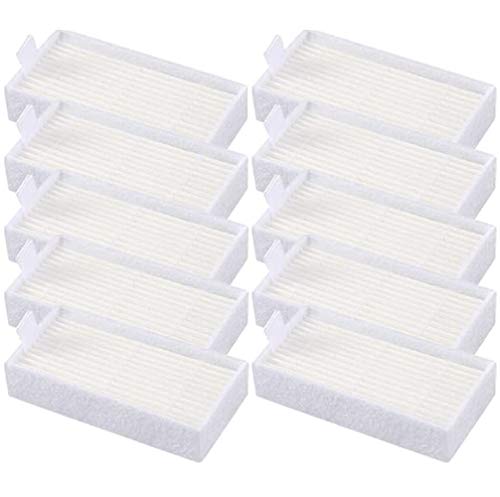
Hepa filters for Ilife Vacuum model V3, V3s V3s pro V5 V5s V5s Pro Vacuum Cleaning Robot. Ilife Filter Replacement.

Designed for shark navigator pet plus nv150, nv251, nv255 and zero-m self-cleaning brushroll pet pro zu62, zu62c, zu60 upright vacuums. compare part # 1238ft60 & 1239ft60.
Electrical and Component Issues

Understanding electrical and component issues in vacuum motors is essential, especially since these factors can lead to overheating and potential failure. We need to pay attention to electrical faults and component wear that can arise over time.
For instance, power surges can introduce excessive voltage, damaging fragile motor components. Loose connections might create intermittent power flow, causing stress and overheating. Additionally, worn carbon brushes can lead to poor electrical contact, causing arcing and more heat build-up. Regular maintenance of filter systems is also crucial to enhance overall efficiency and prevent overheating.
To mitigate risks, we should regularly check and maintain electrical systems, ensuring good connections and replacing worn parts as needed. Proactive measures not only extend the motor’s lifespan but also enhance efficiency, keeping our vacuum motors running smoothly and effectively.
Recommended Products

Precise Dimensions for Compatibility: The Brush Part Size: 29 x 10 x 6mm / 1.14 x 0.4 x 0.24 inch (Length x Width x Thickness); Total Size: 75 x 21 x 10mm / 2.95 x 0.83 x 0.93 inch (Length x Width x Thickness)

The carbon brush size is 6.3mmx11mmx32mm/ 0.25x0.43x1.26inch. Fit for many devices motors, such as vacuum cleaners, cutting machines, etc.

UPGRADED THICKER COPPER WIRE: Engineered with thicker copper for higher conductivity and more stable current flow, delivering improved contact, greater durability, and extended service life.
Mechanical Wear and Lubrication Degradation

When mechanical wear and lubrication degradation occur in vacuum motors, we can face serious overheating issues. Excessive friction arises from wear patterns in metal components, causing them to push beyond design tolerances. This leads to increased heat generation and reduced pump efficiency.
Improper lubrication intervals can exacerbate these problems. As oil degrades, it forms sludge, which hampers smooth operation and increases friction further. Insufficient lubrication can lead to dry running conditions, creating extreme heat that damages motor components.
To prevent these issues, we should maintain regular lubrication schedules and monitor lubricant quality. This proactive approach helps guarantee smooth operations, enhances efficiency, and prolongs motor lifespan by reducing the risks associated with mechanical wear and inadequate lubrication. Additionally, ensuring that the vacuum has a high-efficiency filtration system can improve overall performance and reduce overheating.
Motor Age and Material Limitations
As vacuum motors age, we often encounter significant challenges related to their performance and safety due to material limitations. The motor lifespan typically decreases after around ten years, leading to increased wear and reduced efficiency. This aging often results in material degradation, affecting insulation and components like bearings and brushes.
Key issues include:
- Degraded Insulation: Increased thermal and electrical stresses can lead to short circuits.
- Worn Components: Higher friction levels generate additional heat.
- Weakened Materials: Common motor materials reach temperature thresholds, causing structural failures.
Understanding these factors helps us anticipate overheating risks. Regular maintenance and timely replacements can extend a vacuum motor’s life, enhancing its efficiency and safety during operation. Additionally, being aware of HEPA filtration can aid in improving a vacuum’s overall performance by reducing dust and allergens.
Operating Environment Factors
Operating environment factors play an essential role in determining how efficiently a vacuum motor performs. We should consider several aspects, including ambient conditions and humidity effects. High temperatures and restricted airflow can cause motors to overheat quickly. For instance, dust buildup on cooling vents can impair heat transfer.
Altitude impacts are another critical factor. Motors at high altitudes face thinner air, reducing cooling efficiency and increasing the risk of overheating. Additionally, external heat sources from nearby equipment can also elevate motor temperatures, stressing the need for effective thermal management.
Improper Maintenance Practices
Improper maintenance practices can greatly impact the performance of vacuum motors, leading to overheating and potential failure. We often overlook how critical regular maintenance is. For instance, dirty filters restrict airflow, making the motor work harder. Here are some preventive measures we should adopt:
- Regularly Clean/Replace Filters: Blocked filters lead to overheating.
- Inspect Components: Periodic checks on carbon brushes and bearings can help identify early issues.
- Follow Maintenance Schedules: Stick to recommended schedules for lubrication and servicing.
Neglecting these tasks increases the risk of overheating. By addressing these simple practices, we can enhance motor longevity and performance while preventing costly failures. Keeping up with maintenance doesn’t just save time—it safeguards our investments.
Recommended Products

Replacement filter for Shark NV500, NV501, NV502, NV503, NV505, NV510, NV520, NV552, UV560, NV642, ZU780, ZU782, ZU785,Compare to Part # XFF500

FIT MODELS – The AZ3002 vacuum filters are compatible with Shark Stratos DuoClean PowerFins Upright Vacuum Cleaner AZ3002 AZ3000 AZ3000W. Filter made of FSC-Certified paper.
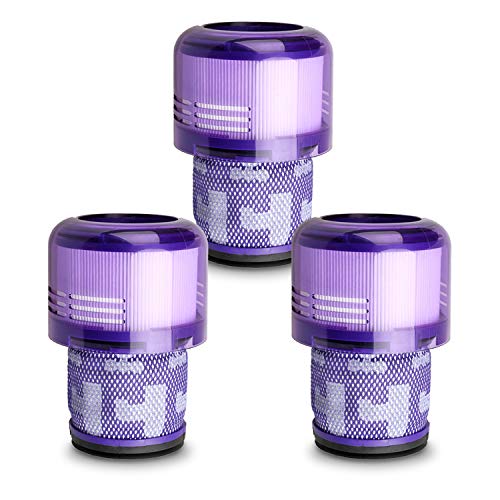
FIT MODELS – V11 V15 Filter Replacement for Dyson V11 Origin Cordless Vacuum (B00FZPRUTY, B0C2J7R8PY) V11 Animal V11 Torque Drive+ V11 Complete V11 Extra V11 Absolute V15 Detect (B0CFRH6NF2, B0CT97D9R2, B0C2J8KJH9) V15s Detect Submarine Vacuums. Compatible with Dyson filter replacement model numbers: Graded SV14, SV15, SV17, SV22, SV28, SV47. Please verify your vacuum model before purchasing to ensure a perfect fit.
Frequently Asked Questions
What Signs Indicate My Vacuum Motor Is Overheating?
When I notice overheating symptoms like a burning smell, abnormal noises, or sudden power loss, I worry my vacuum’s motor might be failing. These signs can lead to serious motor failure if I don’t act quickly.
Can Overheating Damage Other Vacuum Components?
Absolutely, I’ve seen overheating damage other vacuum components. The heat can lead to motor failure and impact seals, gaskets, and lubricants. It’s essential to monitor your vacuum’s temperature to prevent these overheating effects.
How Can I Prevent My Vacuum From Overheating?
Preventing my vacuum from overheating’s like keeping a car engine cool. I always follow vacuum maintenance tips and use cooling techniques, ensuring regular checks, proper airflow, and maintaining filters to keep everything running smoothly.
Is There a Way to Test Motor Temperature?
I often use various testing methods to check motor temperature. Measuring coil resistance after operation or using an infrared thermometer helps me monitor heat without invasive tools, ensuring the motor runs within safe temperature ranges.
What Should I Do if My Vacuum Motor Overheats?
Imagine your vacuum as a tired warrior, battling dust. If it overheats, I’d unplug it, let it rest, then inspect for clogs. Regular motor maintenance guarantees it’s ready for the next battle with effective overheating solutions.


